
The semiconductor industry, a key sector in the digital world
The semiconductor chip is at the core of the EU’s capacity to be competitive. That was one the lessons of the recent international chips shortage caused by the Covid-19 crisis, which severely impacted the production of Europe’s key industrial sectors. With AI driving compute to unprecedented heights, ubiquitous computing, quantum computing and cloud-to-edge infrastructure technologies, the development of advanced semiconductors is critical for Europe’s future resilience, economic growth and progress on the twin green and digital transition5 and the Clean Industrial Deal. Meanwhile, projections state that the global semiconductor industry would represent a trillion-dollar industry by 2030 and the task for our leaders is to focus strategically on R&D, factories, and sourcing. Especially while competitors are ramping up domestically, as in the United Stated where the new US Investment Accelerator office aims to speed up corporate investments in semiconductors.
Towards more European competitiveness and resilience
Continuous exploration for development, design and manufacturing of micro/nano-electronics is essential to maintain competitive advantage, hence the critical role played by the forging of strong international and principles such as the rule of law, fundamental freedoms, democracy, human rights, and open, free and fair trade. The European Union has targeted an increase in its share of the global semiconductor industry from 9% in 2022 to 20% by 2030. Despite the EU’s decline in competitiveness, Europe’s industry increased its investment in R&D by 9.8% in 2023, surpassing growth of corporate R&D investment in the US (+5.9%) and China (+9.6%) for the first time since 2013.
Combine this with the EU’s healthy position in semiconductor research through RTOs such as imec (Belgium), CEA-Leti (France), Fraunhofer (Germany) and Tyndall (Ireland), who contribute to top tier semiconductor publications and have extensive contract research executed for most of the prominent semiconductor companies around the world, the EU is already positioning itself favourably.
"The EU target of a 20% share in the global semiconductor industry by 2030 relies on building competencies, increasing production capacity, attract new talent, build new infrastructure and invest heavily in R&D. Such objectives align with Japanese goals and ambitions."
The EU and Japan relationships: building on common values and fair trade
The EU and Japan are both global leaders in advanced technologies, with unique and complementary expertise in various sectors of the semiconductor value chain. Japan’s established leadership in materials science, manufacturing equipment, and advanced packaging, combined with the EU’s strengths in cutting-edge research, photonics, quantum, and embedded end-user applications, creates a powerful synergy.
The EU and Japan, as strategic partners, both recognize the critical importance of strengthening cooperation in the semiconductor sector to enhance supply chain resilience and economic security. In 2025, two major commitments were taken to calls for reinforced research and innovation, economic security, and regulatory cooperation
EU-Japan Digital Partnership Council
made on 12 May 2025 in Tokyo to reinforce tech and digital cooperation between the EU and Japan.
EU-JAPAN Competitiveness Alliance
a Joint Statement following the EU-Japan Summit in Tokyo on 23 July 2025
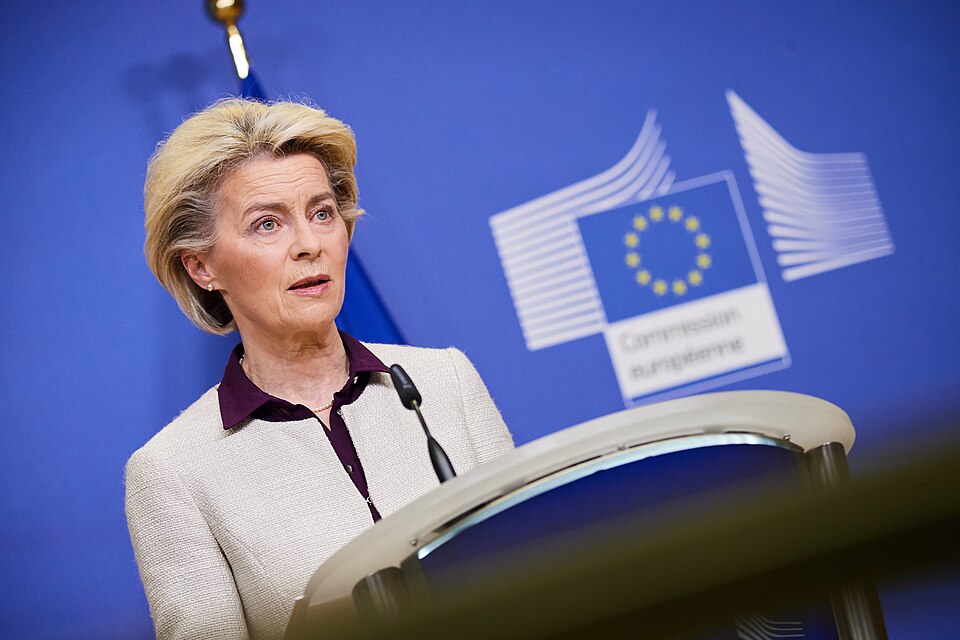
"With a combined GDP of a fifth of the global total and a market of 600 million people, Europe and Japan have the scale and influence to shape global rules on trade and technology, ensuring they align with our shared values of fairness and openness."
Ursula von der Leyen